
1. Project Overview: Building Storage Capacity on a Large Scale
For warehouses handling substantial inventory volumes, storage planning involves more than simply adding more racks. The layout must balance storage capacity, accessibility, operational safety, and the movement of goods.
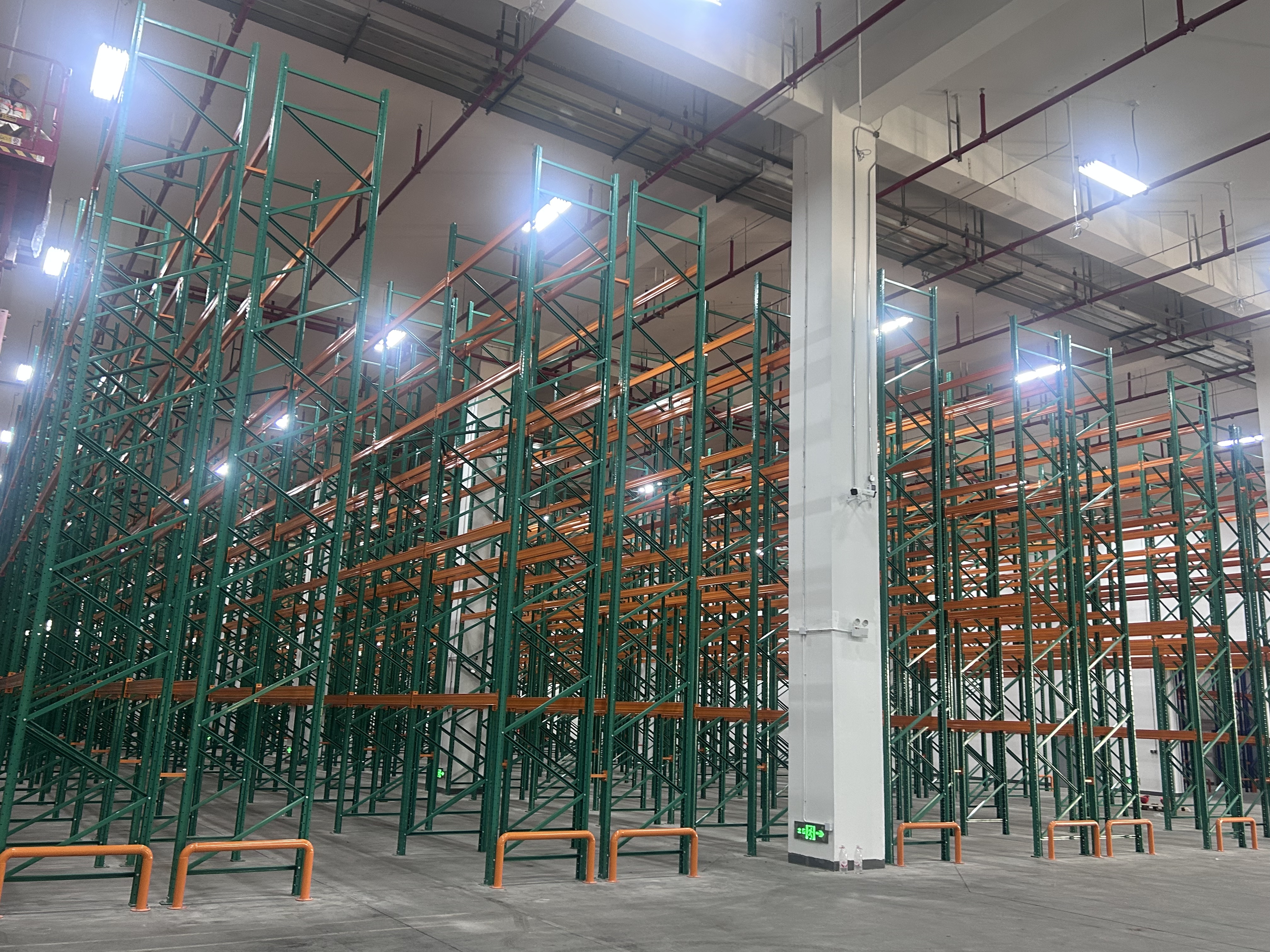
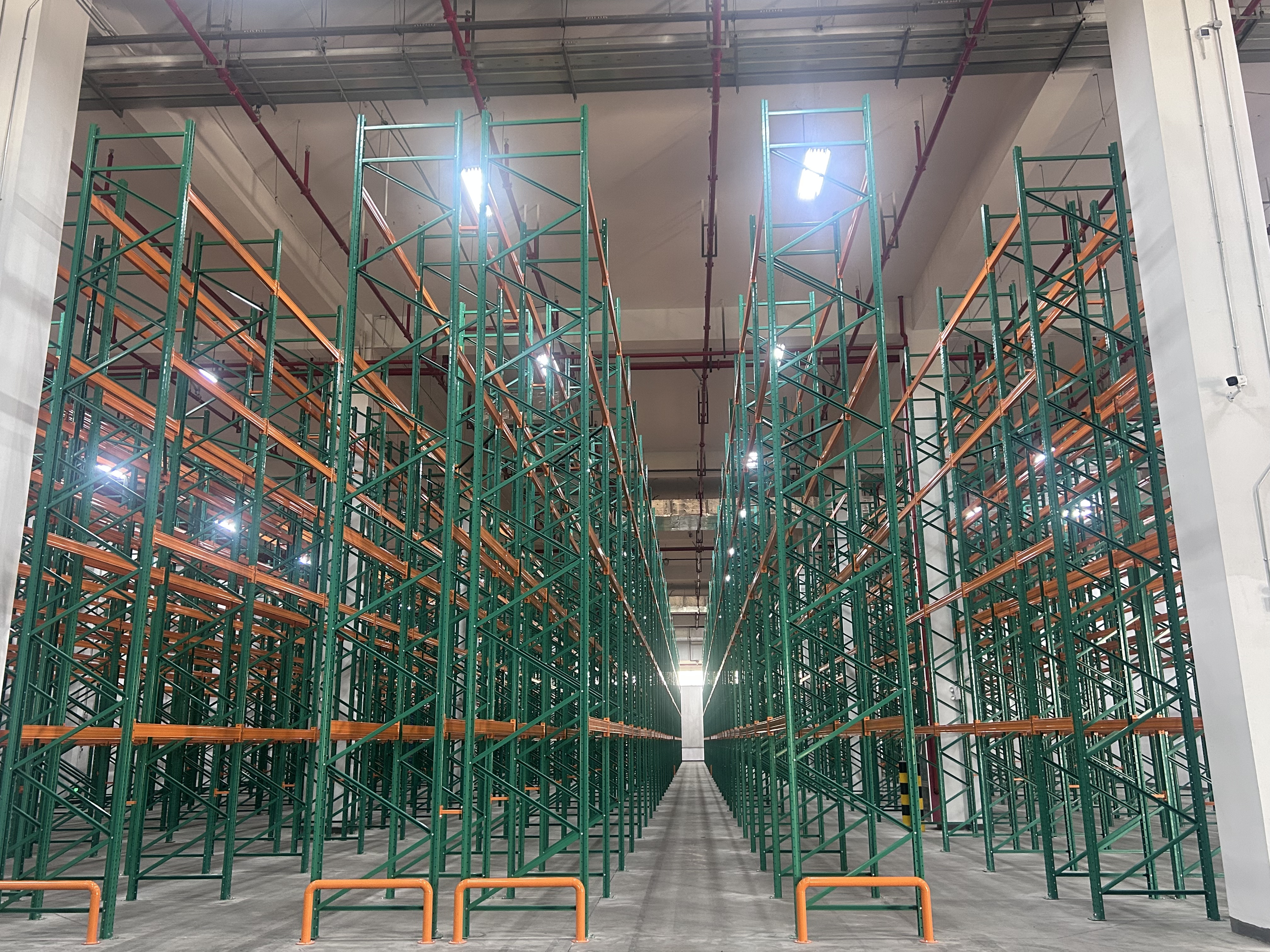
In this project, we supplied a heavy-duty selective pallet racking system with a total planned capacity of 8,854 pallet positions.
The four-level configuration allows the warehouse to store palletized goods vertically rather than relying entirely on floor storage. This helps create a more structured storage layout and makes better use of the available building height.
The project focuses on three important requirements:
-
High Storage Capacity: Providing thousands of organized pallet positions for warehouse inventory.
-
Easy Pallet Accessibility: Allowing operators to access individual pallet locations.
-
Efficient Space Utilization: Making full use of the warehouse's vertical storage area.
By combining these elements, selective pallet racking provides a reliable foundation for large-scale warehouse operations.
2. Four-Level Storage Configuration
One of the key features of this project is its four-level pallet storage design.
Compared with conventional floor stacking, multi-level pallet racking makes it possible to store more goods within the same warehouse footprint. Each level provides designated storage positions, helping warehouse operators organize inventory more systematically.
The four-level structure offers several practical benefits:
Better Use of Vertical Space
Warehouses often have considerable unused vertical space. Installing multi-level pallet racks helps turn this space into additional storage capacity without requiring an expansion of the warehouse floor area.
Organized Inventory Locations
Each pallet position provides a designated location for goods. This makes inventory identification, stock counting, and replenishment easier to manage.
Flexible Storage Management
Selective pallet racking is particularly useful for warehouses handling multiple product types and different SKUs. Individual pallet locations can be accessed without moving other pallets.
Adaptability to Daily Operations
The adjustable beam structure allows storage levels to be configured according to pallet dimensions and operational requirements, subject to the rack's approved design and load capacity.
3. Green and Orange: A Distinctive Industrial Racking Design
Beyond storage performance, the appearance of a warehouse racking system also contributes to the overall organization of the facility.
For this project, we adopted a combination of green upright frames and orange horizontal beams.
The contrasting colors create a clear visual distinction between the main structural components:
-
Green Upright Frames: Form the main vertical support structure of the racking system.
-
Orange Horizontal Beams: Connect the upright frames and support pallet loads at each storage level.
This color combination gives the warehouse a distinctive industrial appearance while making the overall rack structure easy to identify.
The finish is also an important part of the product presentation. A consistent surface coating helps maintain a uniform appearance across thousands of racking components.
4. Selective Pallet Racking for Flexible Warehouse Operations
For warehouses managing different product categories, storage accessibility is often just as important as storage density.
Selective pallet racking is one of the most widely used warehouse storage systems because it provides direct access to individual pallets.
Unlike drive-in racking, where pallets are stored several positions deep within the same lane, selective pallet racking provides separate access aisles for pallet retrieval.
This makes it suitable for operations involving:
-
Multiple product categories and SKUs
-
Frequent pallet replenishment
-
Regular stock rotation
-
Different inbound and outbound schedules
-
Warehouses requiring flexible inventory management
With 8,854 pallet positions available, this project provides a substantial storage infrastructure while maintaining the accessibility that selective racking is known for.
5. Structural Design and Warehouse Safety
When a pallet racking system reaches thousands of storage positions, structural design and installation quality become particularly important.
Every component must work together to maintain the stability of the complete system.
The main structural components include:
Upright Frames
Upright frames provide vertical support and transfer the loads from the beams to the warehouse floor.
Horizontal Beams
Beams connect the upright frames and support pallets at the designated storage levels. Their specifications must be selected according to pallet dimensions and the required loading capacity.
Bracing Components
Diagonal and horizontal braces connect the upright members to improve frame stability.
Base Plates and Floor Anchors
Base plates distribute the loads at the bottom of the upright frames, while suitable floor anchors help secure the structure.
In addition to selecting appropriate components, the installation process must ensure correct frame alignment, beam engagement, anchoring, and compliance with the approved engineering design.
These details are essential for maintaining safe and reliable warehouse operations over the long term.
6. Improving Warehouse Efficiency Through Better Storage Planning
A large storage capacity is valuable only when the warehouse can operate efficiently.
The 8,854-position pallet racking system creates a more organized environment for receiving, storing, and retrieving goods.
With clearly defined storage locations, warehouse operators can manage inventory more systematically and reduce unnecessary movement during daily operations.
The system also provides a practical foundation for future warehouse management improvements, including barcode identification, inventory tracking, and integration with warehouse management software.
For businesses experiencing continuous inventory growth, investing in a properly designed pallet racking system can help improve both storage organization and operational flexibility.
7. A Reliable Storage Foundation for Growing Businesses
Large-scale warehouse projects require careful coordination between product design, manufacturing, and installation.
From the selection of upright profiles and beam specifications to the final surface finish, every detail contributes to the performance and appearance of the finished racking system.
This project demonstrates how a well-designed selective pallet racking system can combine substantial storage capacity with a practical warehouse layout.
With 8,854 pallet positions, four storage levels, and a distinctive green-and-orange design, the installation provides an organized and scalable storage solution for modern warehouse operations.
At LAZIO Racking, we provide customized warehouse storage solutions covering selective pallet racking, drive-in racking, shuttle systems, mezzanine platforms, and automated storage systems.
Whether you are planning a new warehouse or upgrading an existing facility, choosing the right racking configuration is an important step toward improving storage efficiency and supporting long-term business growth.